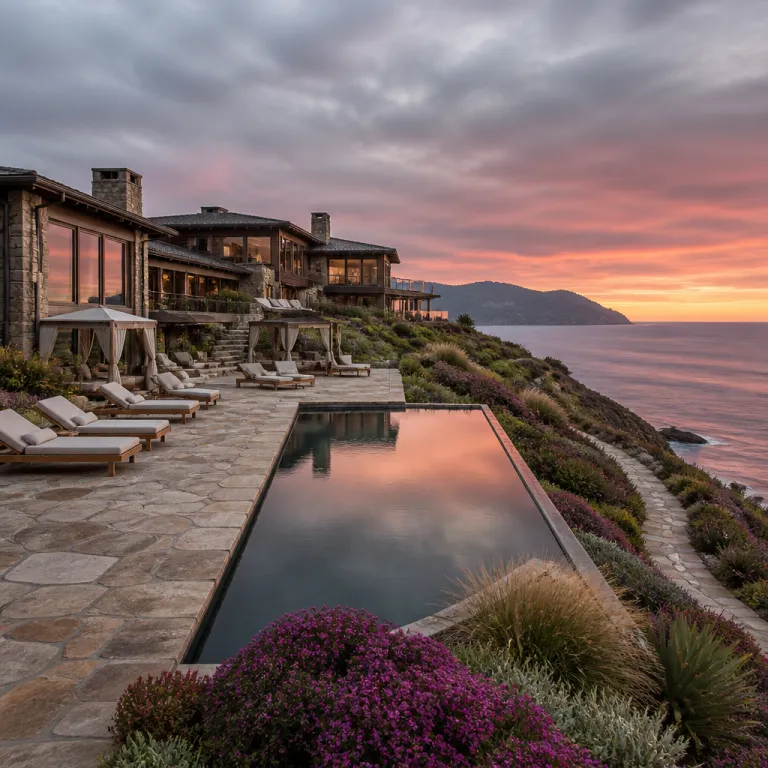
The real question: when is a luxury lodging house price worth it ?
When you see a nightly rate above 750 dollars, the first instinct is to compare it with a 200 dollar hotel and ask whether the luxury lodging house price is worth it. The answer depends less on marble bathrooms and more on how the property structures its invisible labour, its staffing ratios, and its long term maintenance, which quietly shape every moment of your stay. If you approach your next trip with this lens, you will judge luxury hotels less by thread count and more by how they use your money to create time, calm, and genuine experience.
Across the global travel market, from London to East Asia and from continental Europe to South America, the most interesting lodging houses operate more like finely tuned households than traditional hotels. They keep staffing ratios close to one team member per room, sometimes better, while many large hotels run closer to one staff member for every three rooms, and that single decision is the biggest driver of price. When you ask whether a luxury lodging house price is worth it, you are really asking whether that dense layer of human attention is something you will actually use during your stay.
Think about your last business trip where you arrived late, needed a quiet room, and had no energy to negotiate with reception about early breakfast or laundry. In a strong luxury hotel, the front office, housekeeping, and culinary équipe have already anticipated those frictions, and the invisible coordination between them is what you are paying for, not just the room itself. Luxury hotel guests who value this kind of frictionless experience usually care less about social media likes and more about whether the property quietly extends their day by an extra usable hour.
The cost anatomy: what sits behind the nightly rate
Strip a luxury lodging house bill down to its components and three cost centres dominate the price you see at booking. First comes labour, because a lodging house that keeps a one to one staff to room ratio must fund salaries, training, and benefits for a highly qualified équipe, often in expensive urban markets such as London, New York, or central districts in East Asia. Second comes the physical asset itself, where heritage buildings and high quality FF&E (furniture, fixtures, and equipment) can easily reach 60 000 dollars per room before a single guest checks in; industry development cost surveys from firms such as HVS and CBRE regularly cite this order of magnitude for upscale and luxury projects.
Third comes programming, the curated layers of wellness, culture, and gastronomy that now define modern luxury hotels across Europe, Asia-Pacific, and the Middle East. Global wellness tourism has grown into a sector estimated at more than 1.3 trillion dollars in annual spend, according to recent Global Wellness Institute reports, and wellness branded residences and lodging houses can command premiums of up to 30 percent above traditional luxury hotels because wellness is the core value proposition, not an amenity. Week long wellness retreats in destinations from Mexico and Central America to the Caribbean region often cost several thousand dollars per person, and the price reflects not only spa facilities but also nutritionists, visiting practitioners, and tightly scheduled daily programming.
When you read a critical market analysis about the growing gap between luxury hotel rates and what guests actually get, such as the one on this detailed rate value breakdown, you start to see why some properties feel expensive rather than valuable. A 750 dollar room that funds a deep roster of staff, locally sourced food, and meaningful cultural programming can feel fair, while a 450 dollar room in a generic hotel with thin staffing and outsourced services can feel like poor value. The key is to connect each visible amenity in your room or suite with the invisible cost structure that makes it possible, then decide whether that structure aligns with how you actually travel.
Heritage, maintenance, and the price of character
Many of the most atmospheric lodging houses in Europe, Latin America, and the Middle East occupy heritage buildings that predate modern hospitality by centuries. Maintaining a 200 year old townhouse in London or a colonial mansion in Central America guest ready costs roughly two to three times more than operating a contemporary concrete tower, because every plumbing upgrade, façade repair, or roof intervention must respect conservation rules. When you ask whether a luxury lodging house price is worth it in such properties, you are also asking whether the emotional weight of history matters to your trip.
Heritage lodging houses in places like Mexico or North and East Africa often work with local artisans to restore stonework, wood panelling, and hand painted ceilings, and those collaborations are slow and expensive. The result is a room where the hallway art, the creak of the staircase, and the courtyard tiles tell you more about the city than any welcome email ever could, which is why many travellers now prefer independent lodging houses over standardised hotels. A detailed analysis on why independent lodging houses are winning over branded luxury chains shows that guests increasingly value this sense of place, even when it pushes the nightly price above comparable chain hotels nearby.
From a cost perspective, every original window frame, custom iron balcony, or hand laid tile floor adds to long term maintenance, and those costs are baked into the rate you pay for each stay. If your trip ideas revolve around architecture, design, or history, that premium can feel like a rational investment in your own experience rather than a vanity spend. If you simply need a quiet room near a meeting venue in Western Canada or major Australian cities, then a modern luxury hotel without heritage constraints may deliver better value at a lower price point.
Staffing, service rituals, and the invisible labour you fund
Walk into a well run luxury lodging house and count how many people you see before you reach your room. There is the doorman who knows your name, the front desk agent who has already pre checked you in, the housekeeper who has adjusted the lighting and temperature, and perhaps a butler who has read your pre arrival preferences, and each of these roles exists because the property has chosen a high staffing ratio. That ratio, often close to one staff member per room or even higher in ultra luxury hotels, is the single biggest reason why a luxury lodging house price is worth it for some guests and not for others.
Hospitality staff in these properties are trained to deliver personalised services that go far beyond standard hotel scripts, from arranging last minute restaurant reservations in London to coordinating complex multi stop itineraries across Asia, Europe, and the Caribbean basin. The dataset from industry research is clear about the objectives of a luxury hotel stay : "Provide exceptional comfort", "Offer exclusive services", and "Ensure privacy and security", and each of these goals requires both headcount and expertise. When you see a high price, you are funding not only the visible team on the floor but also the back of house équipe managing laundry, engineering, security, and technology systems that keep your stay seamless.
For business leisure travellers who extend a work trip into a weekend stay, this density of service can be the difference between a restorative break and a frustrating 48 hours. If you value quick replies to every request, from a simple reply in the app chat to a late night room service order, then the invisible labour behind those replies is exactly what makes a luxury lodging house price worth it. If you rarely ask for help, prefer minimal interaction, and mostly use your room as a place to sleep, then a leaner service model in other hotels may suit you better and free budget for other parts of your travel.
Wellness, programming depth, and when paying more transforms your stay
Wellness has moved from side amenity to central storyline in many luxury hotels across East Asia, Australasia, and the Middle East. Properties now design entire stays around sleep optimisation, nutrition, movement, and mental reset, and that shift explains why wellness branded lodging houses can charge up to 30 percent more than traditional luxury hotels in the same market. The question for you is whether that extra price delivers genuine transformation or simply a more photogenic spa for your social posts.
Consider a week long wellness retreat in a coastal lodging house in the South Pacific or a jungle property in South America, where the package includes daily consultations, tailored menus, guided movement sessions, and off grid excursions. Those programmes require specialist staff, from nutritionists to yoga teachers and local guides, and the labour, insurance, and logistics behind them are what you are funding when you decide that a luxury lodging house price is worth it for a reset trip. In such cases, the room becomes almost secondary, a comfortable base for a carefully choreographed series of experiences that aim to change how you feel when you return to North America or Canada.
For an executive traveller who spends most of the year in meeting rooms from London to São Paulo and Mexico City, paying more for a stay that meaningfully improves sleep, posture, or stress levels can have a measurable impact on performance. If your trip ideas include digital detox, fitness gains, or learning a new practice, then a higher nightly price spread over a short, intensive stay can represent strong value. If, on the other hand, you only plan to use the spa once and skip the scheduled activities, then a simpler luxury hotel with a good pool and quiet room may be a better use of your travel budget.
A practical framework to judge whether the price is worth it
Before you book a high end lodging house, pause and map the rate against how you actually live during a trip. Start by listing what you will use : early check in, late check out, spa access, in room dining, concierge support, or simply a quiet room with strong Wi Fi, and then ask the property direct questions about each point. When you align the nightly price with a realistic picture of your stay, you can quickly see whether the luxury lodging house price is worth it for this specific journey.
Next, consider geography and market dynamics, because a 750 dollar room in London or East Asian financial hubs may represent similar value to a 400 dollar room in smaller cities across Europe or North and East Africa. Demand spikes during major events, festivals, or peak seasons in Western Canada, Mexico, or the Caribbean islands can push prices up across all hotels, so compare like for like dates and locations rather than headline numbers. Remember that average nightly rates for luxury hotels often sit around 500 dollars in major markets, with wide variation depending on seasonality and brand positioning; benchmarking reports from STR and similar data providers regularly show this pattern.
Finally, look beyond glossy photos and curated social feeds, and read detailed guest feedback where the original poster explains how the property handled problems, special requests, or last minute changes. On specialised platforms, you will often see comments from users who joined in January or similar dates, with labels such as joined Jan or poster joined, and their long form posts can reveal whether the service culture matches the rate. When you see consistent replies from management, sometimes marked as reply Mar or similar timestamps, addressing issues with concrete solutions, that is a strong signal that the invisible labour behind the scenes is robust enough to justify a higher price.
From expensive to valuable: how to align price with your own metrics
Expensive is a number, while valuable is a feeling that your money has been converted into time, ease, or memory. For some travellers, especially those on tight business schedules across North America, Europe, and Asia, the most valuable luxury hotel is the one that lets them move from airport to meeting to room with minimal friction, even if the décor is understated. For others, particularly those planning a rare celebration trip to Western Canada, the South Pacific, or the Caribbean region, value lies in a sense of occasion, where every detail of the stay feels curated and personal.
One way to think about whether a luxury lodging house price is worth it is to calculate the cost per meaningful hour rather than per night. If a 200 dollar hotel in Central America leaves you dealing with noise, slow service, and basic food, you may spend half your stay solving problems, while a 700 dollar lodging house in Mexico that anticipates your needs can free up entire mornings and evenings for rest or exploration. In that sense, the higher price can deliver a better return on your limited travel time, especially on short trips where every hour counts.
As you plan future trip ideas, keep an eye on new openings and shifts in the market, because fresh lodging houses often launch with strong value propositions to build loyalty. A curated guide such as the one on notable lodging house openings this season can help you spot properties where pricing, service ambition, and design are still in that sweet spot before rates climb. When you combine that research with clear personal metrics for comfort, service, and experience, you will be able to decide, property by property, when a luxury lodging house price is truly worth it for you.
Key figures behind luxury lodging house pricing
- Average nightly rates for high end hotels in major global cities often hover around 500 USD, with luxury suites and speciality rooms ranging from 300 to over 1 500 USD per night depending on location and brand tier (industry development cost surveys and STR benchmarking data). This range explains why two visually similar rooms can sit at very different price points in the same market.
- Average FF&E (furniture, fixtures, and equipment) investment per room in upscale and luxury hotels can reach approximately 60 000 USD, according to hospitality cost benchmarks from consultancies such as HVS and CBRE. Such capital expenditure must be recovered over years of operation, directly influencing the nightly price you see when booking.
- Wellness tourism has grown into a global market estimated at more than 1.3 trillion USD in annual spending, outpacing overall tourism growth according to Global Wellness Institute reports. Lodging houses that position themselves as wellness destinations can therefore justify premiums of up to 30 percent over comparable luxury hotels without such programming.
- Staffing ratios in intimate lodging houses often approach one staff member per room, compared with ratios closer to one staff member for every three or more rooms in larger chain hotels, as highlighted in hotel operations studies and asset management reviews. Because labour is the largest operating cost in hospitality, this difference alone can add hundreds of dollars to the nightly rate in high wage cities.
- Maintaining heritage properties, especially those older than two centuries in dense urban centres, can cost two to three times more than maintaining contemporary hotel buildings, according to conservation and property management case studies. These higher maintenance and compliance costs are reflected in the rates of character rich lodging houses in historic districts across Europe, South America, and Asia.
FAQ about what you are paying for at a luxury lodging house
What amenities are typically included in a luxury lodging house stay ?
Amenities in luxury hotels and lodging houses usually include spa facilities, high quality fitness spaces, gourmet dining, and attentive concierge services. Rooms tend to feature premium bedding, advanced technology for lighting and climate control, and generous bathrooms with high end toiletries. Many properties also offer thoughtful extras such as complimentary pressing, curated minibars, and tailored local recommendations to elevate your stay.
How much does a luxury lodging house room usually cost per night ?
Prices for luxury hotel rooms generally range from about 300 USD to more than 1 500 USD per night, depending on destination, season, and brand positioning. In major business and leisure hubs such as London, New York, or key cities in East Asia, average nightly rates around 500 USD are common for well located luxury hotels. Suites, heritage rooms, and wellness focused packages can push the price significantly higher, especially during peak demand periods.
Which factors most strongly influence luxury lodging house pricing ?
The main drivers of price are location, seasonality, staffing ratios, and the cost of the physical asset, especially in heritage buildings. Programming depth, such as wellness retreats, cultural events, or gastronomy led experiences, also adds to the rate because it requires specialist staff and additional infrastructure. Brand reputation and demand patterns in specific markets, from Europe to Central America and the Caribbean, further shape how high nightly prices can climb.
How can I tell if a high nightly rate represents good value ?
Start by matching the rate to what you will actually use during your trip, such as spa access, concierge help, or extended check out, and ask the property clear questions about each element. Compare the offer with similar hotels in the same market and season, paying attention to staffing levels, room size, and guest feedback about service consistency. If the higher price translates into more usable time, better rest, and fewer frictions during your stay, it is likely delivering good value for your specific needs.
Is it better to book a luxury lodging house far in advance ?
Booking in advance usually gives you access to a wider choice of room types and sometimes more favourable rates, especially in high demand destinations and during peak seasons. It also allows you to clarify package details, wellness inclusions, and cancellation policies with the hotel before committing. For very popular lodging houses in Europe, Asia, or the Caribbean region, early booking is often the only way to secure preferred dates and room categories.